
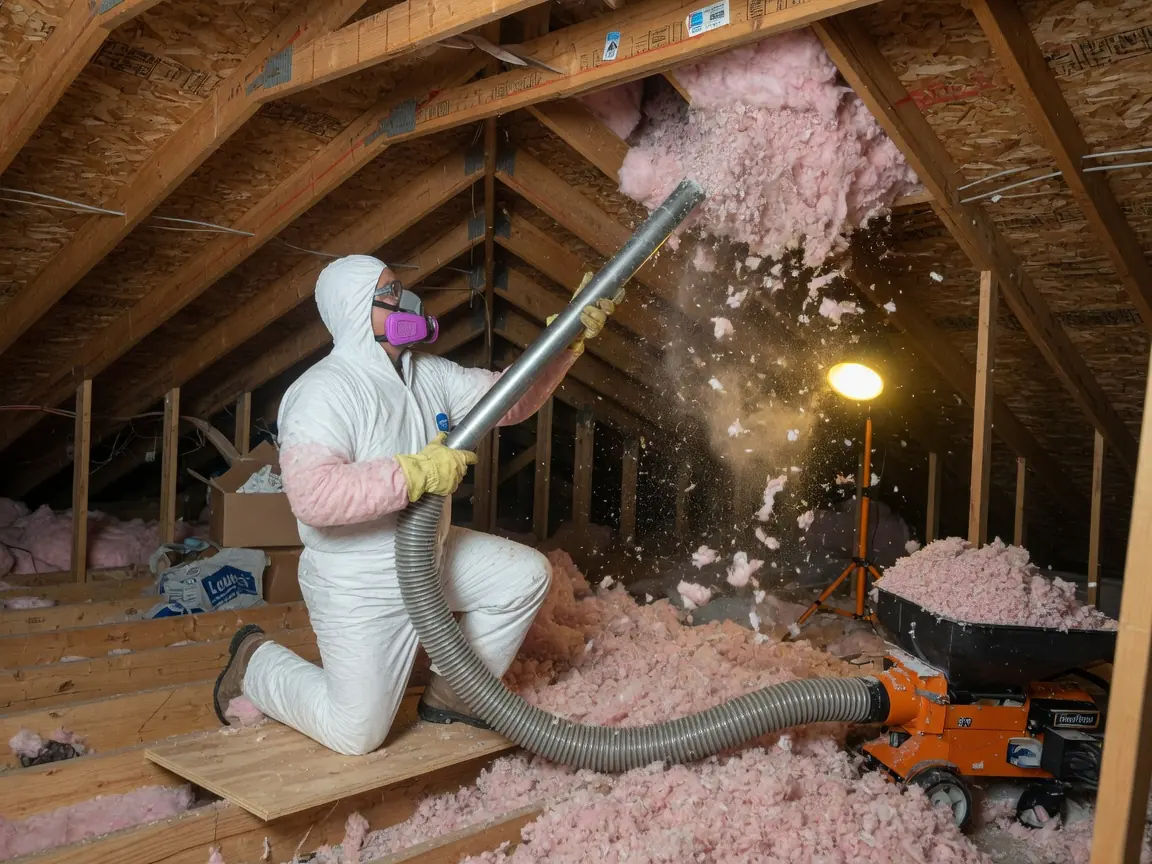
Blown-in insulation, also called loose-fill insulation, is installed with a machine that blows small pieces of fiberglass or cellulose through a hose into the attic. Because it flows around joists, wires, pipes and blocking, it covers the attic floor more completely than batt insulation, which often leaves gaps where it is cut to fit.
For most Tulsa homeowners, blown-in insulation is the best value in home energy upgrades. It can go right over existing insulation that is still in good shape, it installs in a few hours, and it does not require tearing anything apart. Combined with air sealing, it can make a noticeable difference in comfort and in heating and cooling costs the same season.
We start every job with a free estimate. Our installer measures the current depth, checks for damp spots, rodent damage, and blocked soffit vents, then recommends a target R-value and the material that fits your attic.
Tulsa tip
Recessed lights that are not rated IC (insulation contact) need a protective cover before insulation is blown around them. Ask your installer to check every can light in the attic.
When Blown-In Insulation Is the Right Choice
- ✓Open attic floors with easy access
- ✓Existing insulation that is thin but dry and clean
- ✓Homes where the ductwork is in good condition
- ✓Budget-friendly upgrades with a fast payback
- ✓Attics with irregular joist spacing or lots of wiring
- ✓Homeowners who want results without a large project
Fiberglass vs Cellulose Blown-In Insulation
Blown fiberglass is lightweight, does not absorb much water, and settles very little over time. It provides roughly R-2.2 to R-2.7 per inch, so reaching R-38 takes about 14 to 17 inches. It is a good all-around choice for Tulsa attics and holds up well if a small roof leak goes unnoticed for a short time.
Cellulose is made mostly from recycled paper treated with fire retardant. It is denser, at roughly R-3.2 to R-3.8 per inch, and does a better job of slowing air movement through the insulation itself, which can help soundproof rooms below. It settles more than fiberglass, so installers blow it a little deeper. Because it absorbs water, any roof leaks should be fixed first.
Blown-In Insulation Services We Offer
✓Attic Top-Ups
New insulation blown over existing material to reach R-38 or R-49.
✓Air Sealing
Sealing penetrations and top plates so warm air and hot air stop moving through the ceiling.
✓Eave Baffles
Baffles that keep insulation from blocking soffit vents.
✓Attic Hatch Insulation
Insulated, weatherstripped hatch or pull-down stair covers.
✓Dense-Pack Walls
Cellulose blown into closed wall cavities in older homes where appropriate.
Blown-In Insulation Cost in Tulsa, OK
| Project | Typical Range | What Affects It |
|---|---|---|
| Blown-in to R-38, ~1,000 sq ft | $1,250–$2,500 | Existing depth, material, access |
| Blown-in to R-38, ~1,500 sq ft | $1,900–$3,750 | Most single-story Tulsa homes |
| Air sealing before blow-in | $500–$1,500 | Number of penetrations, attic access |
| Hatch or stair cover | $150–$450 | Size and cover type |
Typical blown-in pricing runs about $1.25 to $2.50 per square foot of attic. We confirm the exact price in a free written estimate.
How It Works
- 1
Inspection
We measure existing depth, check ventilation, wiring, recessed lights and moisture.
- 2
Air Seal and Baffles
Gaps are sealed, eave baffles installed and the hatch weatherstripped.
- 3
Blow In
Insulation is blown evenly to the target depth with depth rulers placed across the attic.
- 4
Final Check
We review the depth markers with you and clean up.